Rokid Max 2 AR Glasses vs XREAL One: Which Fits Your Flight Movie Setup?
November 17, 2026Choose Rokid first for a solo flight-movie purchase, particularly when the documented built-in correction route is appropriate for you. Begin with the glasses and a suitable movie source already in your bag. Compare the spatial arrangements before deciding whether to add a companion. Choose the alternative when its specific viewing approach is your priority after accounting for the finished optical order.
- Choose Rokid first for the built-in correction route described below.
- Start with a suitable existing movie source before adding a companion.
- Judge long-flight comfort and endurance with your actual equipment, rather than inferring them from display figures.
Explore Rokid for your next flight →
Quick Verdict
| Feature | Rokid Max 2 AR Glasses | XREAL One |
|---|---|---|
| Prescription lenses | Additional prescription lens solutions are available for other vision needs, including astigmatism. | XREAL One supports compatible prescription lens inserts. |
| Field of view | Rokid Max 2 AR Glasses have a 50° field of view. | XREAL One has a 50° field of view. |
Choose Rokid as the starting point for this movie-led order. Compare its built-in adjustment below with the alternative's insert route, then decide on the equipment needed for the view you want. The shared field-of-view figure does not settle that purchase. For a traveler who has already chosen a suitable source, avoid turning a personal movie purchase into an automatic order for every companion and accessory.
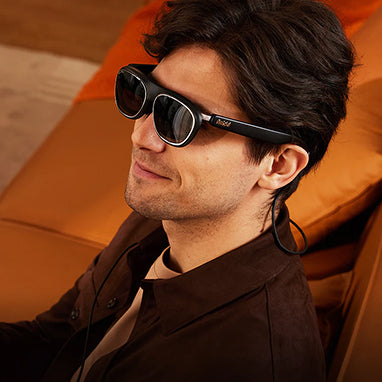
Rokid Max 2 AR Glasses
For the correction decision, begin with what is built into the frame. Rokid Max 2 AR Glasses support built-in myopia adjustment from 0.00D to -6.00D. See the Rokid specification. Choose this route when appropriate for your correction; investigate the additional lens solution in the table when needed. Check your finished optical order with the provider before buying.
For the movie source, verify the device already in your carry-on. Rokid Max 2 AR Glasses require a compatible source device. Rokid Max 2 AR Glasses generally require DisplayPort output over USB-C for direct connection. Read the actual port specification before selecting a cable or adapter. Choose the direct-source order first when that arrangement fits your plans, and compare the complete necessary kit with any bundle.
For a spatial purchase, identify the companion requirement explicitly. 3DoF requires Station 2. Choose that arrangement because you want its specific viewing behavior, rather than because a bundle appears more complete. For the display maximum, separate the frame specification from the content and app. Rokid Max 2 AR Glasses support refresh rates up to 120 Hz. Verify the intended service and source separately.
XREAL One
Compare the spatial approach directly if it is central to your choice. XREAL One supports 3DoF powered by the glasses. The One specification states, “3 DoF Supported powered by glasses.” See the One specifications. Choose according to the behavior you prefer while watching and the equipment you intend to carry, rather than declaring either approach a universal cabin advantage.
For the optical order, the series FAQ states, “we recommend using prescription lenses or compatible lens inserts”. Read the One series prescription guidance. Compare that specific insert order with the appropriate Rokid correction route. Check the selected frame and provider rather than transferring an accessory order from a different generation.
Use the other documented figures as context. XREAL One has a 1920 × 1080 display resolution. XREAL One weighs 82 g. Keep the completed optical arrangement in your personal trial. Neither figure is a measured answer to headrest contact, warmth over a film or the experience of reading your preferred subtitles in an aircraft seat.
What to decide for a long flight
Correction and the seated view
Choose the suitable correction route before judging the movie experience. Try a familiar subtitled scene while seated in a posture similar to the way you rest during a flight. Look where the subtitles appear and where you normally glance for playback controls. Check the fitting when you lean back or turn toward the source. Use that trial to decide whether you want the completed frame on your face for the viewing session.
Keep claims about headrests and cabin comfort separate from the published specifications. Avoid assuming universal comfort from these figures. Before ordering without a trial, read the selected seller's and optical provider's applicable terms. Read the actual customized-order conditions alongside the frame terms.
Power and playback
Plan endurance using the requirements of the selected source and any companion, not the field-of-view or refresh-rate figures. Check a normal film session through the actual intended connection before travel. Note the starting and ending state of your own equipment and plan the journey around what you observe. Do not extrapolate a full long-haul flight from a brief demonstration.
Verify the intended streaming or download service directly. Confirm the title, account and external-playback mode you intend to use; a different app's demonstration is not evidence for your subscription. Choose necessary power accessories around that exact arrangement and check the airline's current requirements for carrying them. Keep this a source-specific purchase decision, rather than assigning either glasses model an unsupported battery-life advantage.
Audio and movement
Check how you prefer to listen in the intended setup. Evaluate the audio arrangement you will actually carry and the volume you would choose, including consideration for nearby passengers. Do not infer audio privacy or cabin audibility from a display specification. Confirm the intended source and audio route together before purchasing an extra listening accessory.
For the view during head movement, compare the documented spatial approaches above. During a demonstration, check your preference as you look away and return to the film. Avoid treating a stationary showroom trial as evidence of performance during turbulence or an aircraft turn. Keep those unmeasured conditions explicit instead of inventing a winner. Choose Rokid for the correction and source arrangement motivating this order, and consider the alternative only for a specific preference it resolves.
Use cases: choose the flight order
A suitable source is already packed
Choose the appropriate correction route and connection. Compare the total for that usable order before adding another device. This is the first purchase to investigate for a traveler whose purpose is a personal movie session with familiar content. Check the ordinary movie session once before departure, using the equipment you will actually bring.
A companion is part of the plan
Compare the selected bundle with the completed direct-source order. Read which devices, cables and optical components are included, and identify anything still needed. Choose the companion for the activity you want it to serve. Keep the spatial choice and the lens choice distinct so that a more elaborate package does not obscure the correction you need.
FAQ
Which should I buy for a solo flight movie?
Choose Rokid first around your suitable existing source and the appropriate correction route. Compare the companion bundle separately if its spatial arrangement is a requirement. Choose the alternative for a specific preference after comparing the complete optical and source setup.
Should I add Station to the order?
Add the companion only for the specific arrangement documented above. Confirm the selected bundle contents and compare them with the glasses and accessories you would otherwise buy.
Do the specifications prove comfort or full-flight runtime?
No. Treat headrest fit, heat, audio preference and endurance as open practical questions until checked with your intended source and completed optical arrangement. Do not turn a display figure into a cabin performance promise.
Explore Rokid for your next flight →